

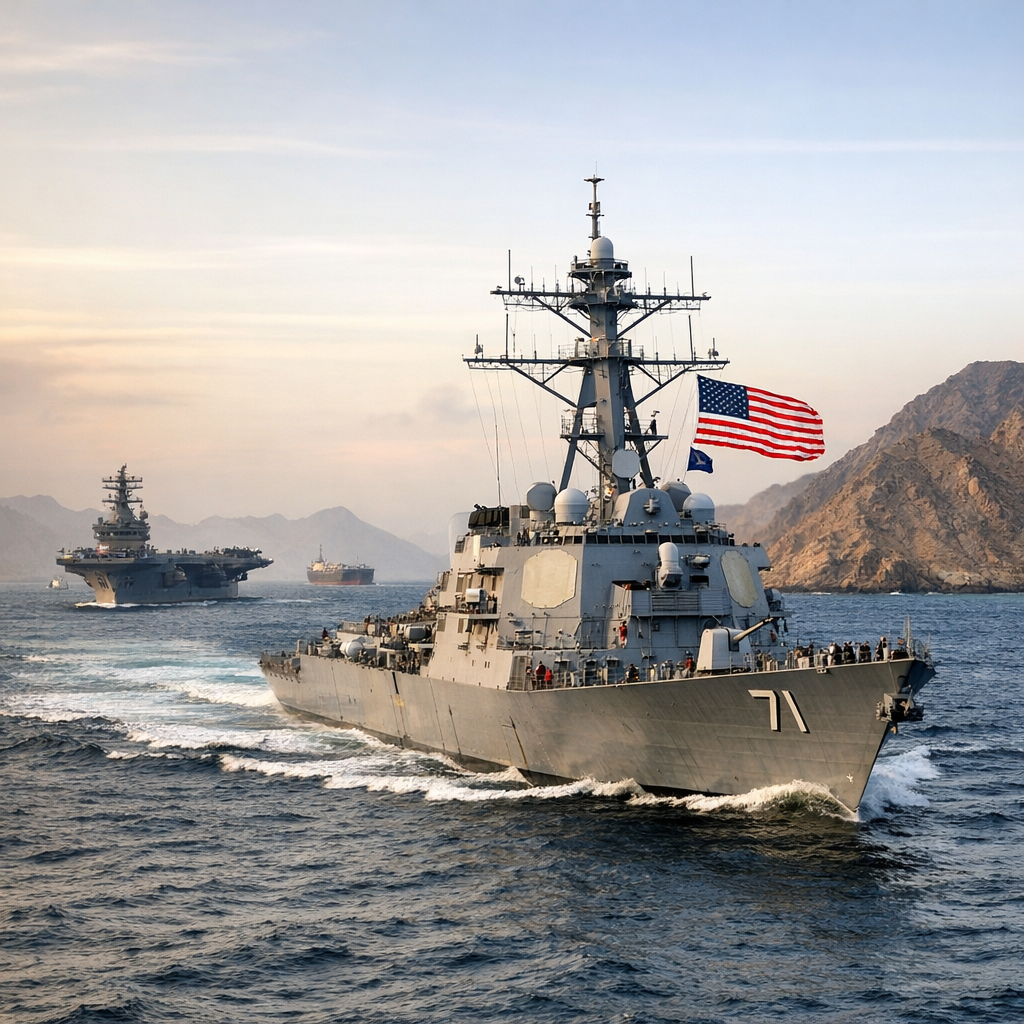
The Strait of Hormuz, a vital waterway for global oil transportation, has recently become a focal point of escalating tensions between the United States and Iran. This strategic passage sees a significant portion of the world’s oil shipments, making any disruption a matter of international concern.
Recent Developments
In early May 2026, reports emerged of a military clash between U.S. and Iranian forces over the Strait of Hormuz. This incident marked the first deadly encounter since a ceasefire was established in April. The U.S. initiated “Project Freedom,” deploying guided-missile destroyers, over 100 aircraft, and approximately 15,000 service members to ensure safe navigation through the strait. Iran, viewing the strait as a critical asset, responded with heightened military activity, leading to a precarious standoff. Source
Implications for Global Oil Markets
The Strait of Hormuz is a chokepoint through which a substantial portion of the world’s oil supply passes. Any disruption in this region can lead to significant fluctuations in global oil prices. The recent military engagements have already caused market volatility, with analysts expressing concerns over potential supply shortages if the situation escalates further.
International Response
Global leaders have called for restraint and diplomatic solutions to prevent further escalation. The United Nations has urged both nations to engage in dialogue, emphasizing the importance of maintaining open and secure shipping lanes for the global economy.
Local Perspective
For residents of Aurora, Colorado, and the broader United States, these international developments may seem distant. However, the ripple effects of such geopolitical tensions can manifest in local economies, particularly through fluctuating fuel prices and potential impacts on industries reliant on stable oil supplies.
Staying informed about these global events is crucial, as they can have direct and indirect effects on our daily lives. As the situation unfolds, it is essential to monitor reliable news sources and understand the broader implications of international relations on our local communities.